
BACK TO BASICS: THE TAIL LENGTH FOR THE LONG-TAIL CAST-ON
All knitters know it well: the long-tail cast-on is one of the most widely used cast-on methods. Versatile, neat, and elastic, it’s often the go-to choice to start knitting sweaters, cardigans, scarves, and all kinds of accessories. It’s one of those cast-on techniques that, once you’ve learned it, quickly becomes a trusted ally, giving your project a clean, professional look right from the very first stitches.
This type of cast on, however, has a small “drawback”: it requires you to estimate the correct length of yarn tail to leave before you start. Too short, and you’ll find yourself halfway through the cast on with no tail left. Too long, and you’ll end up wasting yarn (or dealing with that annoying extra “curly tail” you never quite know what to do with).
Learning how to calculate the yarn length for the long-tail cast on is a small technical skill that makes a big difference—especially when you’re designing a garment or following a pattern with a specific stitch count. The good news is that you don’t have to rely on guesswork (as most of us do the first few times!) or on imprecise methods: there’s a simple, repeatable, and very reliable system.
In this article, we’ll show you a straightforward, practical, and super reliable method that you can adapt to any number of stitches you need to cast on.
Why it’s important to calculate the yarn length for the long-tail cast-on correctly
Unlike other cast-on methods, the long-tail cast-on uses two strands of yarn at the same time: the working yarn coming from the ball and the yarn tail. This means that the initial amount of yarn is essential to cast on the required number of stitches successfully.
Correctly calculating the length of the yarn tail allows you to:
- avoid having to unravel everything and start over multiple times;
- avoid wasting yarn, especially when working with precious yarns or limited quantities;
- achieve a more relaxed and even cast on.
A practical method to calculate yarn length for the long-tail cast on: step-by-step tutorial
Here’s a simple method to calculate how much yarn you need for the tail before starting the long-tail cast on:
Start by casting on 10 stitches (you can choose any number of stitches you prefer).

Being careful not to undo them, slide the cast-on stitches off the needle.
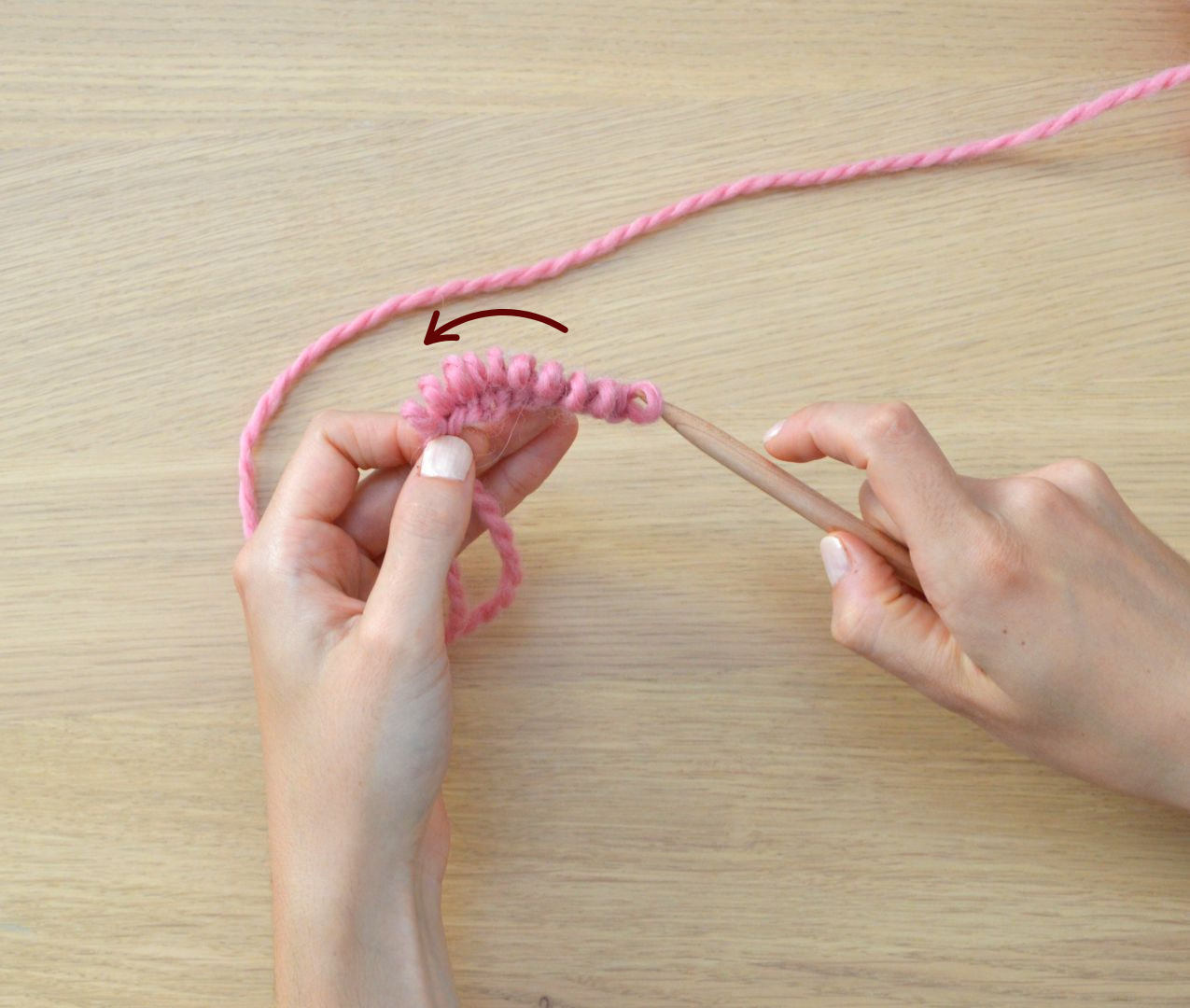

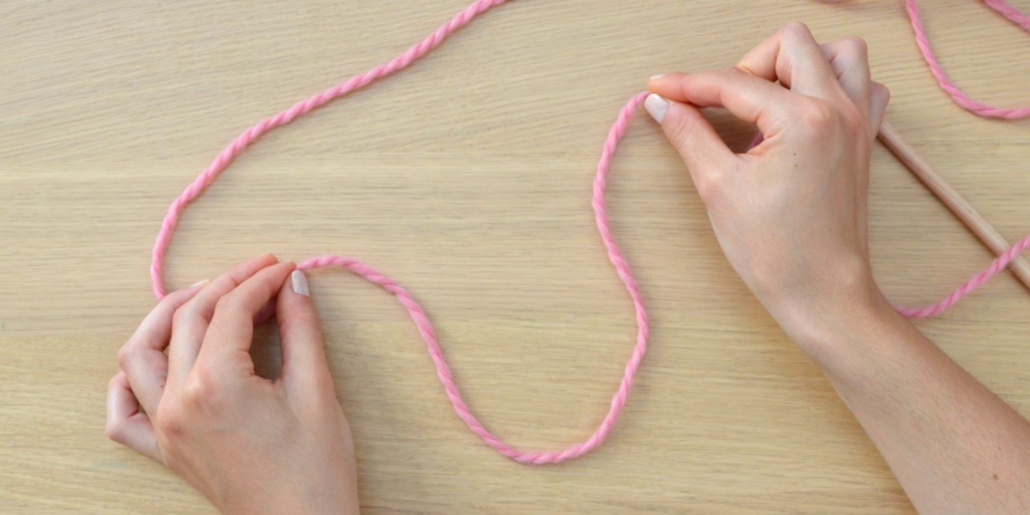
Now, slowly unravel the cast-on stitches. As you do this, use your right hand to hold onto the yarn tail used for the cast on, about one centimeter from the last cast-on stitch.

Keep unraveling the stitches until only one loop remains, which is the very first stitch you cast on.

With your left hand, hold the yarn firmly at a point close to the first cast-on stitch, then unravel it.
The length of yarn between the fingers of your left hand and your right hand is the amount of yarn you need to cast on 10 stitches.
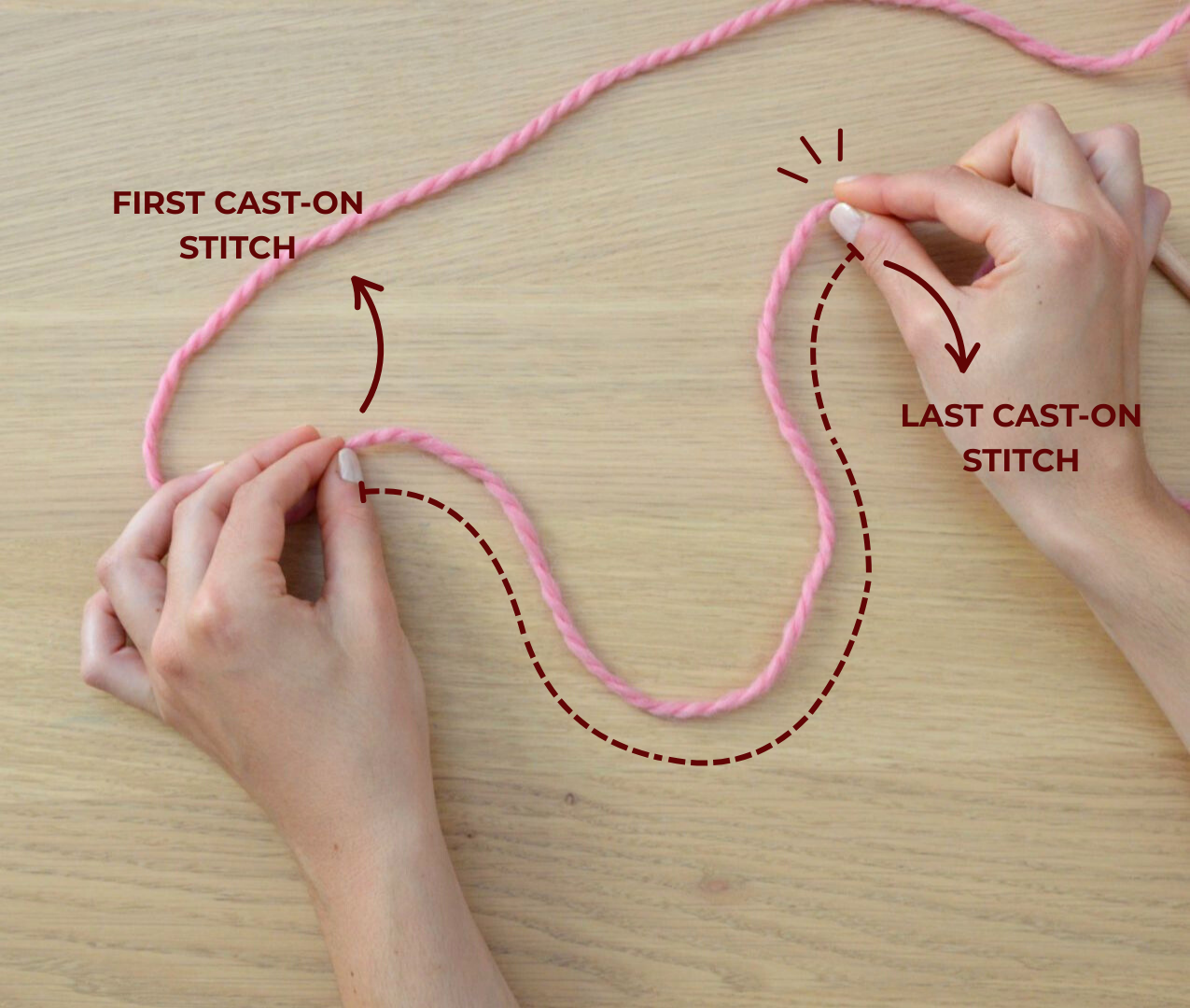
Now that you know how much yarn is required for 10 stitches, you can easily calculate the length needed for the number of stitches required by your project.
For example, if you need to cast on 30 stitches, simply fold the yarn back on itself to get three times the length needed to cast on 10 stitches.
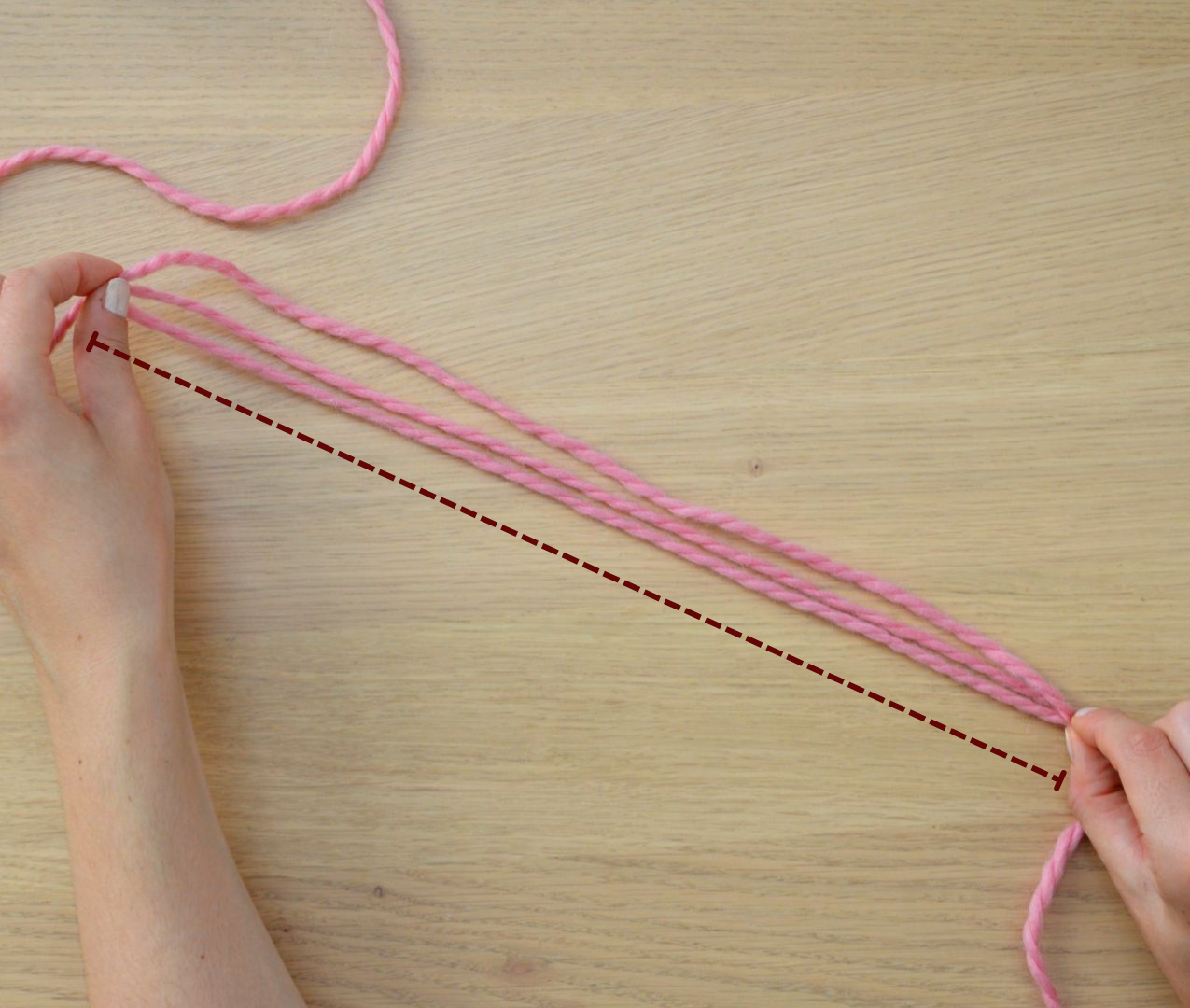
Tip: always add about 5–10 cm (2–4 inches) to the final length of the tail, so you have a little extra yarn to weave in at the end of your project.
This method is especially useful if you need to cast on a large number of stitches, particularly when working with delicate or more “tricky” yarns to unravel, such as mohair. You can finally say goodbye to rough estimates and start every project with the right amount of yarn—no waste and no stress.
Once you get the hang of it, this will become one of those little tricks you’ll use all the time, without even thinking about it. Try it a couple of times on a swatch and you’ll see how quickly it becomes second nature!
Now that you know how to calculate the yarn length for the long-tail cast on, you’re ready to put this technique into practice with a project that really highlights it. If you’d like to move from technique to making, we recommend checking out our free lace sweater knitting pattern—a perfect project for practicing accuracy and consistency.
If you’re just getting started, be sure to follow our Back-to-Basics posts or visit the video tutorial section on our website and YouTube channel for even more step-by-step guidance 🧶
